Last updated on:
16.09.2026
URL structure
URL structure decides which address carries your content and receives links. Why pointing a link at the wrong URL wastes it.
Die #1 Plattform für skalierbare Sichtbarkeit
All-in-One SEO Platform
Für smarte Brands & Agenturen
Über 5.000 zufriedene Nutzer

URL structure describes how the addresses of a website are organised: how deep pages sit, which words the path contains, and whether the same content is reachable under more than one address. It determines which page collects the value of an incoming link.
Why this decides whether a link works
A link points at one specific address. If that address redirects, is a variant with parameters, or is a duplicate of the real page, part of the effect is lost along the way. Pointing links at the wrong URL is quiet and common, and nothing in the reporting will flag it.
The three checks before booking
Does the target URL load directly without a redirect. Is it the version the site treats as canonical. And is it the address that already ranks for the term you care about. If a redirect chain sits in front of it, fix that before the placement goes live, not after.
What makes a structure sound
Short paths, readable words instead of identifiers, one address per piece of content, and no unnecessary nesting. The practical benefit is not that Google prefers pretty URLs, it is that a clear structure makes duplicates and redirect chains visible.
The honest limitation
Changing URL structure on an existing site is risky. Every changed address needs a redirect, and every missed one loses what it had. If the current structure works, leave it alone.
Choose your target page when booking.
Related: indexing · duplicate content · anchor text
About the author
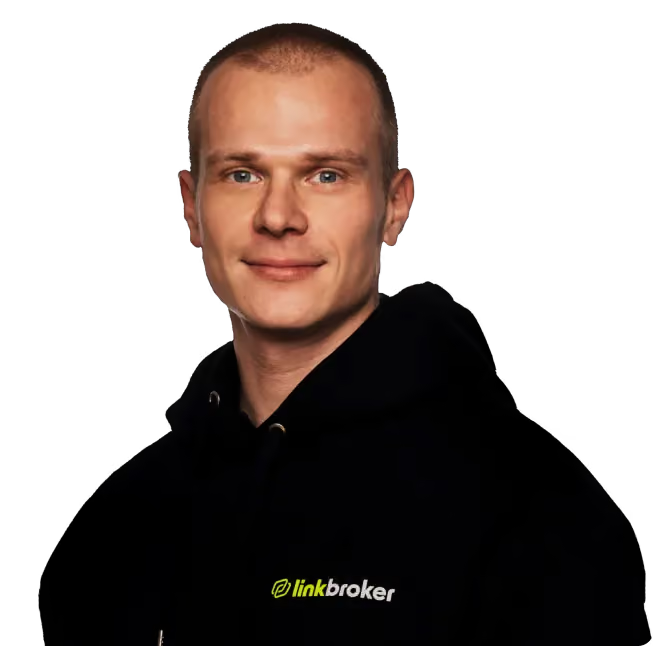
Julian Kirfel
Co-Founder & CMO
Julian Kirfel ist Co-Founder und CMO von Linkbroker.de und Experte für skalierbare SEO-Strategien, digitale PR und Linkbuilding. Als ehemaliger Vorstand mit Marketingverantwortung und Gründer mehrerer E-Commerce-Marken bringt er tiefes operatives Verständnis mit. In der Aufbauphase von Linkbroker verantwortete er den Vertrieb und die Umsetzung von Kundenprojekten und half zahlreichen Unternehmen dabei, SEO als führenden Wachstumskanal zu etablieren. Heute leitet er die Weiterentwicklung und Vermarktung des Marktplatzes und teilt seine Erfahrung in Fachbeiträgen (u. a. bei OMR), auf LinkedIn und im firmeneigenen YouTube-Kanal.